Feeding the Land, Feeding the Soul: The Quiet Revolution Happening Inside Molokai's Ancient Fishponds
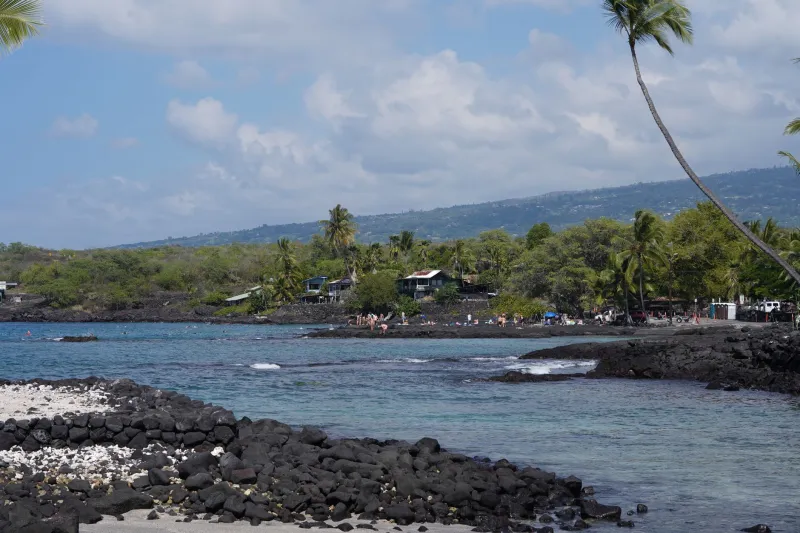
Stand at the edge of Kaloko'eli fishpond on a calm morning and you'll notice something most travelers miss entirely. The water doesn't just sit there. It breathes. The tide pushes gently through the makaha—the sluice gates built from stacked lava rock centuries ago—and the whole system exhales like something alive. Because it is.
Molokai is home to more intact ancient fishponds than any other Hawaiian island. Roughly 60 loko i'a once lined its southern coastline, an extraordinary feat of Indigenous engineering that fed communities for generations. Today, a growing number of Native Hawaiian practitioners are rolling up their waders and getting back in the water—literally—to bring these systems back. And what they'll tell you, if you ask, is that this work is not just ecological. It's devotional.
What a Fishpond Actually Is (And Why It Still Matters)
Let's clear something up right away: a loko i'a is not a fish tank. It's not a farm in the industrial sense. It's a carefully balanced relationship between fresh water, saltwater, tidal flow, and living creatures—managed not with chemicals or machinery, but with generations of accumulated knowledge passed from kupuna to mo'opuna (grandparent to grandchild).
The design is elegant in its simplicity. Stone walls, sometimes stretching hundreds of feet, curve out into the ocean to enclose a shallow bay. The makaha allow juvenile fish to swim in with the tide and feed on the algae-rich water inside. As they grow too large to exit through the gate openings, they become part of a living pantry—available to the community when needed, but never overharvested.
At their peak, these ponds supported a population density that rivaled some of the most productive agricultural regions in the ancient world. Molokai's ali'i (chiefs) oversaw their maintenance as a sacred responsibility. The fish weren't just food. They were a covenant between people and place.
The Collapse—and the Comeback
Colonization did what it tends to do. Land was seized. Traditional resource management was dismantled. Many of the ponds silted up, choked with invasive mangrove, and faded into the landscape as curious ruins that tourists occasionally photographed from the road.
But Molokai has always had a stubborn streak. The island's residents—many of whom are Native Hawaiian—have consistently pushed back against outside development and cultural erasure in ways that the rest of the state has sometimes failed to match. That resistance shows up in the fishponds.
Organizations like the Hui Malama Loko I'a network have been quietly doing the hard work of restoration for years. Community workdays bring together families, students, and volunteers to clear invasive species, repair crumbling walls, and reintroduce native fish species like awa (milkfish) and 'ama'ama (mullet). It is unglamorous, muddy, physically demanding work. The practitioners doing it will tell you it is also among the most meaningful things they've ever done.
"When you're pulling weeds out of a pond your ancestors built," one community member told a gathering of visiting students last year, "you're not just cleaning a pond. You're in conversation with them."
Stewardship as Spiritual Practice
Hawaiian spirituality doesn't separate the sacred from the practical in the way Western frameworks often do. Mālama ʻāina—caring for the land—is itself a form of prayer. The loko i'a restoration movement embodies this beautifully.
Practitioners speak of the ponds as wahi pana, or storied places, imbued with the mana (spiritual power) of those who built and tended them. Restoring a fishpond isn't a heritage project in the museum sense. It's an act of reciprocity—honoring what was given and giving something back in return.
This worldview has practical implications too. Decisions about which fish to harvest, how many, and when are guided not just by ecological monitoring but by traditional protocols rooted in the Hawaiian lunar calendar, the Kaulana Mahina. The moon's phase determines the rhythm of the work. That's not superstition. That's a sophisticated system of environmental management that kept these ecosystems thriving for over a thousand years.
How Conscious Travelers Can Engage
Here's where it gets important, especially if you're visiting Molokai with the intention of doing more than just passing through.
Some restoration sites welcome respectful visitors to participate in community workdays. These aren't tourist experiences packaged for convenience. They're real work sessions where your presence is welcomed as a contribution, not as an audience. Show up ready to get your hands dirty, follow the lead of the practitioners running the session, and leave your agenda at the door.
A few things worth knowing before you go:
Ask before you photograph. The ponds are not photo sets. Some areas and ceremonies are not for outside documentation. When in doubt, ask. When told no, respect it without negotiation.
Listen more than you talk. If a kupuna or practitioner shares knowledge with you, receive it with gratitude. This is not the moment to compare it to something you read online or draw parallels to other Indigenous traditions.
Give something back. Whether that's physical labor, a donation to a local restoration organization, or simply spreading accurate information about what's happening here when you get home—reciprocity matters.
Visitors who approach the loko i'a with genuine humility often describe the experience as quietly transformative. There's something about working alongside people who are healing their own history that recalibrates your sense of what matters.
The Bigger Picture
The fishpond revival on Molokai sits at the intersection of food sovereignty, environmental justice, and cultural reclamation—three of the most pressing conversations happening in Indigenous communities across the US right now. When a loko i'a produces fish that feeds a local family, that's one less household dependent on expensive imported food. When a young person learns to read the tides and the moon to manage a pond, that's ancestral knowledge surviving another generation.
Molokai's southern shoreline is, in this sense, one of the most quietly radical places in America. The work being done here isn't loud. It doesn't trend. But it is, in the most literal sense, life-sustaining.
If you make it to this island—and we hope you do—take some time to stand at the edge of one of these ponds. Watch the water move through the gate. Let it be more than a photo opportunity. Let it be a lesson in what it looks like when a people refuse to let their relationship with the land be severed, no matter what history throws at them.
That's the spirit of Molokai. And it's been here a very long time.