The Wisdom That Doesn't Live Online: How to Respectfully Learn from Molokai's Elders
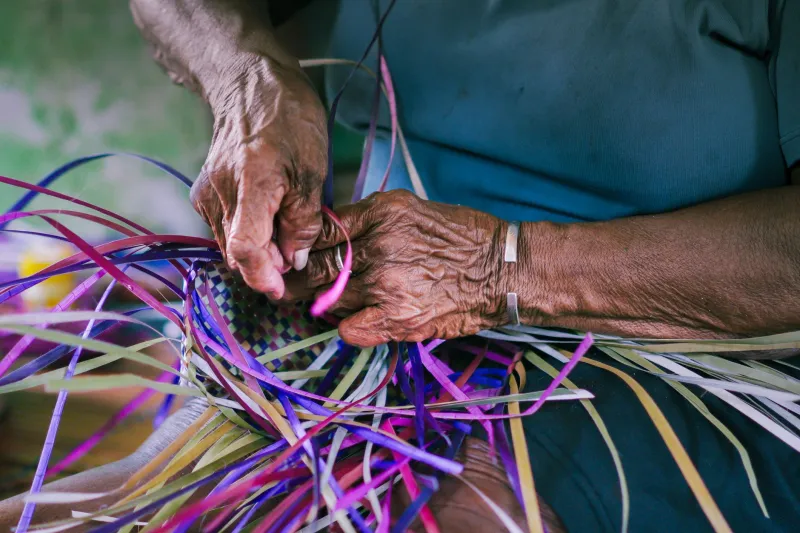
There's a particular kind of knowledge that doesn't get uploaded anywhere. It lives in the hands of a woman who has been weaving lauhala for sixty years. It's in the voice of a man who learned to navigate by stars from his grandfather, who learned from his. It exists in the pauses between sentences, in the way someone reads the wind before deciding whether to go out on the water.
On Molokai, this kind of knowledge is still alive. The island's kupuna—its elders, its knowledge keepers—carry traditions, language, and spiritual understanding that represent an unbroken thread back through Hawaiian history. And for visitors who approach with the right intention and the right posture, there are genuine opportunities to sit at the edge of that wisdom and receive some of it.
This guide is about how to do that well. Because doing it poorly—showing up with entitlement, treating cultural knowledge as content, or extracting without reciprocating—causes real harm. And you don't want to be that traveler.
Understanding What Kupuna Actually Means
In Hawaiian, kupuna (singular and plural) refers to elders and ancestors—those who have lived long enough to accumulate knowledge worth passing on. But the term carries more weight than the English word "elder" typically does in mainland American culture, where age and wisdom aren't always treated as synonymous.
In the Hawaiian worldview, kupuna are the living link between the community and its ancestors. They are the keepers of mo'olelo (stories and histories), of oli (chant), of the protocols that govern how people relate to each other, to the land, and to the spiritual world. Their knowledge isn't just historical—it's actively functional. It shapes how communities make decisions, how young people understand their identity, and how the land is cared for.
Approaching a kupuna is therefore not like visiting a living museum exhibit. It's entering a relationship. And relationships, in Hawaiian culture as in most human cultures, come with responsibilities on both sides.
The Foundation: Reciprocity Over Extraction
The concept of reciprocity is central to how conscious visitors should approach any cultural learning opportunity on Molokai—and it's worth sitting with before you even book your flight.
Reciprocity means that knowledge sharing is not a one-way transaction. When a kupuna or cultural practitioner takes time to teach you something, they are giving something of real value. Your job is not simply to receive it, post about it, and move on. Your job is to ask yourself: what am I contributing in return?
This doesn't have to be complicated. It might mean:
- Showing up on time and prepared for any workshop or cultural exchange you've registered for. Wasting a knowledge keeper's time is a failure of reciprocity.
- Supporting local organizations financially. Many of the groups facilitating cultural education on Molokai operate on shoestring budgets. A direct donation matters more than a five-star review.
- Sharing what you've learned accurately and with proper attribution when you return home. If you tell people about what you experienced, name the community, the organization, the island. Don't flatten it into vague "Hawaiian wisdom."
- Returning. Some visitors build relationships with Molokai over multiple trips, deepening their understanding and their contributions over time. That kind of sustained engagement is deeply valued.
Finding Legitimate Opportunities for Cultural Exchange
Not every encounter with a Hawaiian elder is an opportunity for a lesson, and it's important to distinguish between formal cultural programs and organic social situations.
Formal programs are the appropriate entry point for most visitors. These are workshops, classes, and exchanges that have been intentionally designed for outside participation by the practitioners running them. They come with established protocols and clear expectations on both sides.
On Molokai, look for opportunities through:
The Molokai Arts Center has periodically offered workshops in traditional Hawaiian arts and practices. Check their current programming before your visit and register in advance—these sessions fill quickly and last-minute drop-ins are not always welcome.
Community cultural events like Makahiki season celebrations or local festivals sometimes include educational components open to respectful visitors. Pay attention to signage and follow the lead of community members about where visitors are and aren't welcome to go.
Locally-guided cultural tours led by Native Hawaiian guides who have chosen to work with visitors are among the most reliable ways to access authentic cultural context. The key word is "locally-led"—not tours operated by outside companies that have hired a Hawaiian face for credibility.
When in doubt about whether an opportunity is appropriate, ask. Ask the people running it. Ask other community members. Uncertainty is not an excuse for proceeding without consent.
Protocols Worth Knowing Before You Arrive
Hawaiian cultural interactions are governed by protocols that visitors often don't know about and accidentally violate. Here are a few of the most important:
The greeting matters. The traditional Hawaiian greeting, the honi, involves pressing foreheads and noses together to share breath. It's deeply intimate and not something you initiate as a visitor. Follow the lead of the person you're meeting.
Silence is respectful, not awkward. In many Western contexts, silence during conversation signals discomfort. In Hawaiian cultural settings, silence often signals deep listening and respect. Don't rush to fill it.
Some knowledge is not for you. Certain chants, stories, and practices are sacred and restricted. If a practitioner shares something and then indicates it is not to be repeated or recorded, that boundary is absolute. It doesn't matter how meaningful the experience was for you personally.
Photography requires explicit permission. Always ask. "Can I take a photo?" is a complete sentence. "Do you mind if I record this?" is another one. Use them every time, without assuming the answer is yes.
Leave the space better than you found it. Whether you're at a fishpond restoration, a weaving workshop, or a cultural gathering, clean up after yourself, offer to help with setup or breakdown, and notice what needs doing without being asked.
What You Might Actually Learn
If you approach these encounters with genuine humility, the range of what's available to learn on Molokai is extraordinary.
The Hawaiian language, 'Ōlelo Hawai'i, is undergoing a powerful revitalization across the islands, and Molokai has been a significant part of that movement. Some kupuna are among the last fluent first-language speakers of certain regional expressions and chants. Even learning a handful of words with proper pronunciation and understanding their meaning shifts the quality of your relationship with the island.
Traditional navigation, plant medicine, textile arts, fishing practices, chant, hula in its ceremonial rather than performative form—all of this lives in the community here. Not all of it will be accessible to you as a visitor, and that's as it should be. But what is offered, when received properly, has a way of changing how you understand your relationship to place, to community, and to time.
Molokai's kupuna are not here to serve your spiritual journey. But some of them have chosen, generously, to share pieces of theirs. The least you can do is show up worthy of the offering.