Step by Step into the Sacred: A Conscious Traveler's Guide to Walking Molokai's Ancient Paths
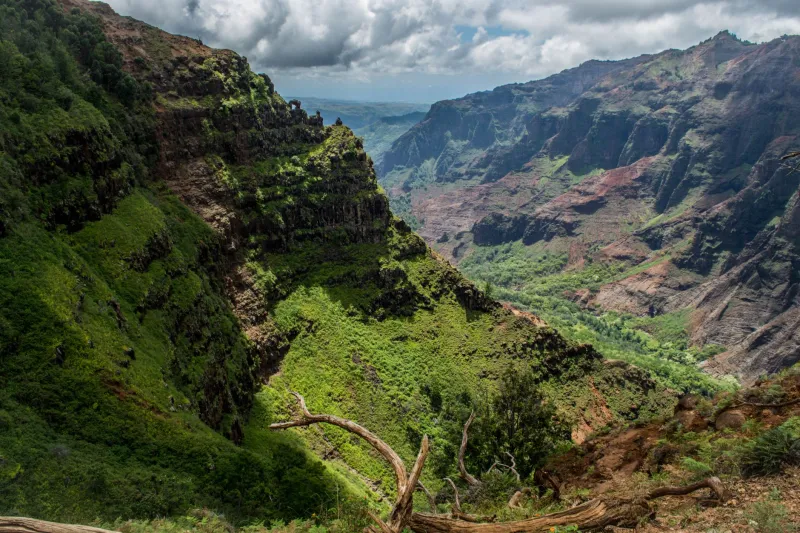
There's a reason people cry on Molokai. Not from sadness, exactly — more like recognition. Something in the red dirt, the salt air, the silence between birdsong, reaches in and loosens whatever you've been holding too tight. And more often than not, that moment happens not at a lookout point or a resort pool, but mid-stride, somewhere along a trail that's been walked by Hawaiian feet for a thousand years before yours.
Molokai doesn't have a lot of tourist infrastructure, and that's not an accident. The island's residents have long resisted the kind of development that turns sacred places into backdrops for selfies. What it does have is land — raw, spiritually charged, and willing to teach you something if you're quiet enough to listen.
Walking here isn't just exercise. It's a practice.
What the Hawaiians Knew About Moving Through the World
Ancient Hawaiians traveled Molokai along a network of trails called alanui — pathways that connected fishing villages to upland farms, heiau (sacred temples) to shorelines, family to family. These weren't casual routes. They were intentional corridors through a landscape understood to be alive, layered with meaning, and inhabited by ancestral presence.
The concept of mālama ʻāina — caring for the land — shaped how people moved through it. You didn't just pass through a place. You acknowledged it. You brought your full attention. You understood that the mountain, the wind, the particular way light fell across a valley at dusk, were communicating something.
That tradition hasn't disappeared. It's living in the practices of Native Hawaiian families, cultural practitioners, and community members who continue to walk these paths with intention. For visitors, the invitation isn't to appropriate those practices — it's to let them inform how you show up.
Before You Step Onto the Trail
This matters more than gear. Before you lace up your boots, take a beat to think about why you're walking. Are you chasing a summit? Checking off a bucket list item? Or are you genuinely open to what the land might offer?
Molokai responds to the second kind of visitor differently than the first.
A few practical protocols that double as spiritual preparation:
- Ask permission, literally and figuratively. Some trails cross private or culturally sensitive land. Research access before you go, and when in doubt, ask a local. The Molokai community is generous with information when approached with genuine respect.
- Leave your earbuds at the trailhead. The soundscape here — wind through ironwood trees, ocean against sea cliffs, the occasional call of a pueo (Hawaiian owl, considered a family guardian spirit) — is part of the experience. Don't outsource your attention to a playlist.
- Move slowly. Molokai is not a place that rewards rushing. The island has its own pace, and the trails will show you more if you match it.
- Don't take what you didn't bring. Rocks, shells, plants — these belong to the land and, in Hawaiian belief, carry spiritual weight. Removing them disrupts something that isn't yours to disrupt.
Trails That Carry Weight
Without turning this into a listicle that flattens sacred geography into tourist content, a few paths deserve mention for the quality of presence they invite.
The Kalaupapa Trail descends 1,700 feet down the world's tallest sea cliffs via a switchback path that mule trains once navigated. At the bottom sits the Kalaupapa Peninsula, site of the historic leprosy settlement where thousands of Native Hawaiians were exiled beginning in 1866. Walking this trail is an act of historical reckoning as much as physical effort. The peninsula is now a National Historical Park, and access requires a permit and guided tour — protocols that exist to honor the people who lived and died there. Go with humility. The weight you feel on the descent isn't just gravity.
Pēpēʻōpae Bog Trail in the Kamakou Preserve takes you into a cloud forest that feels genuinely primordial. Managed by the Nature Conservancy, this elevated ecosystem hosts native plants found nowhere else on Earth. The boardwalk trail keeps you from damaging the fragile terrain, and the mist that frequently rolls through gives the whole walk an otherworldly quality. This is a place where the Hawaiian concept of wao akua — the realm of the gods, the deep wilderness — becomes less metaphorical.
The North Shore coastal paths, less formalized and requiring local knowledge to navigate safely, offer some of the most dramatic shoreline in the entire Hawaiian archipelago. The sea cliffs here are staggering. Standing at their edge, you understand viscerally why Hawaiians believed the landscape held mana — spiritual power. This isn't the place to push limits. It's the place to recognize them.
The Meditative Dimension
Here's what experienced pilgrims — from the Camino de Santiago to the Kumano Kodō in Japan — consistently report: the transformation doesn't happen at the destination. It happens somewhere in the middle, when the body is tired enough that the mind finally stops performing and starts actually experiencing.
Molokai's trails are long enough and demanding enough to get you there. The island's relative lack of cell service accelerates the process. Without the option to scroll, post, or distract yourself, you're left with the trail, the landscape, and whatever's been waiting quietly at the back of your mind.
That's not always comfortable. It's almost always worthwhile.
Some walkers bring a journal and stop to write at natural resting points. Others practice a kind of moving meditation, syncing breath with footfall. Some simply walk, and let the walking do what walking does when you stop trying to control the outcome.
The Hawaiian tradition offers its own framework: pono, meaning righteous, balanced, in right relationship. Walking with pono means moving through the land in a way that honors what came before, acknowledges what surrounds you, and leaves things better than you found them. It's a high bar. It's also a useful aspiration.
Coming Back Different
People who walk Molokai slowly — really slowly, with attention — tend to talk about it in ways that sound slightly embarrassing when they get home. They use words like clarity and reset and, yes, finding themselves, which is the kind of language that usually signals someone trying to sell you something.
But on Molokai, it's just accurate. The island has a way of stripping things back to what matters. The trails are part of that. So is the silence, the lack of distraction, the fact that the community here has chosen depth over spectacle for generations.
You don't have to be on a spiritual journey to walk these paths. But if you walk them with even a fraction of the intention that Hawaiian travelers brought to them for centuries, don't be surprised if you arrive somewhere you didn't expect.
That's the point. That's always been the point.
Planning a walking visit to Molokai? Connect with local guides and cultural practitioners before you go — their knowledge makes the difference between a hike and a genuine experience.