Forget the Future: How Molokai's Oldest Habits Are the Most Revolutionary Thing You'll Ever Try
Somewhere between your third productivity app and your fifth attempt at a morning routine, you probably started wondering whether all this forward motion is actually going anywhere. You're not alone. And if you've spent any real time on Molokai, you already know the island has a quiet, almost stubborn answer to that question.
It doesn't hustle. It doesn't optimize. It doesn't rebrand itself every tourist season. Molokai just is — rooted, deliberate, and profoundly unbothered by the pressure to modernize. And paradoxically, that's exactly what makes it one of the most forward-thinking places in America.
The Counterintuitive Logic of Staying Put
We're conditioned to associate progress with newness. New tech, new methods, new metrics. But there's a growing body of research — in psychology, neuroscience, and public health — suggesting that many of the things we've discarded in the name of efficiency were actually holding us together. Community storytelling. Subsistence food practices. Intergenerational knowledge-sharing. Slow, embodied work with the land.
Molokai never discarded these things. Not because the island is frozen in time — that's a romanticized myth that does a disservice to a living, breathing community — but because its people made a conscious, ongoing choice to protect what works. That's not nostalgia. That's discernment.
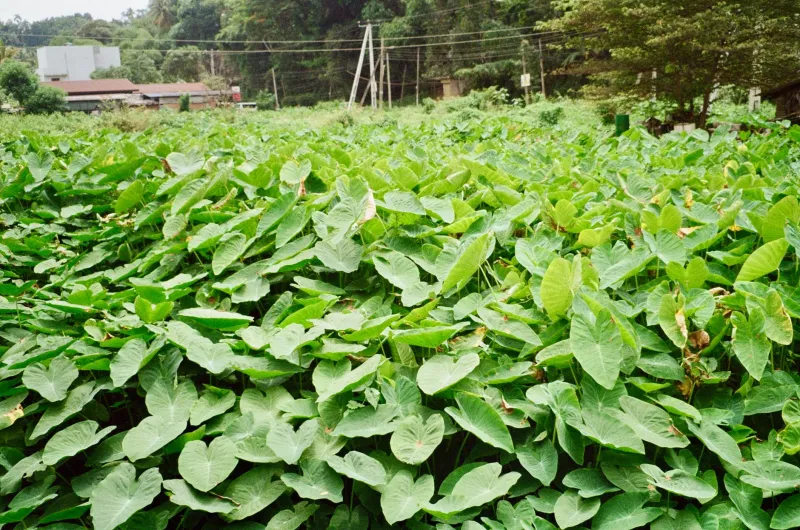
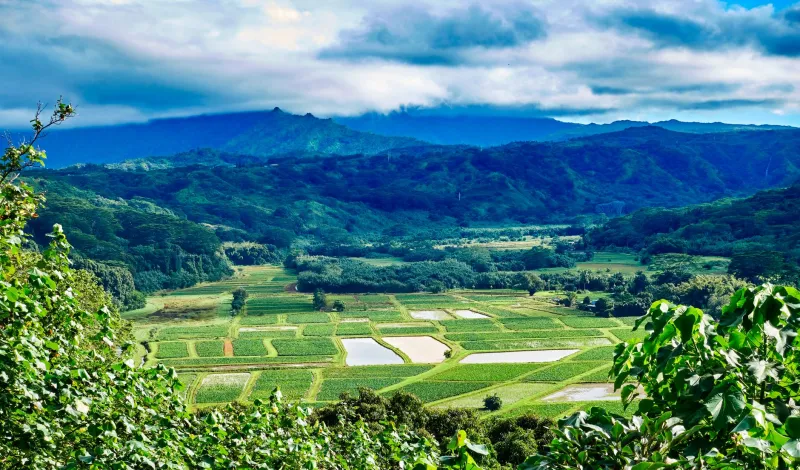
When you walk through a taro lo'i alongside a Hawaiian farmer who learned his craft from his grandmother, you're not witnessing a relic. You're watching a sophisticated, field-tested system of ecological and psychological wellness that has survived centuries of disruption. The fact that Silicon Valley is now paying consultants to teach executives about "deep focus" and "analog time" should tell you something.
What Oral Tradition Actually Does to Your Brain
One of the most striking things visitors notice on Molokai is how stories travel. Not through screens, not through podcasts, but mouth to ear, elder to child, generation to generation. The Hawaiian tradition of oral storytelling — mo'olelo — isn't just a charming cultural artifact. It's a neurological workout.
Researchers studying oral cultures have found that active listening to narrative — real, unmediated storytelling — engages parts of the brain that passive media consumption simply doesn't reach. Memory consolidation, emotional processing, social bonding: all of it lights up when a story is told by a human voice in a shared physical space.
Molokai's communities still practice this. Kupuna (elders) share histories at gatherings. Families talk story over food. Knowledge moves through relationship, not just information transfer. If you're lucky enough to be welcomed into one of these moments as a visitor, pay attention to how you feel afterward. There's a particular kind of fullness that doesn't come from a podcast.
The takeaway you can bring home: start one analog story practice. A weekly family dinner where phones stay in another room. A monthly call with a grandparent where you ask them to tell you something they've never told you before. A neighborhood gathering where someone shares a memory. It sounds small. It isn't.
Subsistence Living as Spiritual Practice
Molokai has one of the highest rates of subsistence living in the entire state of Hawaii. A significant portion of the island's population hunts, fishes, and grows a meaningful share of what they eat. This isn't poverty — it's sovereignty. And it creates a relationship with food that most of us in the continental US have almost entirely lost.
When your dinner came from the ocean you can see from your window, or from the garden your family has tended for three generations, eating becomes an act of connection rather than consumption. The meal carries memory, effort, and reciprocity. You don't just eat — you participate in a cycle.
Visitors who spend time with local families on Molokai often describe a shift in how they experience food for weeks after returning home. They slow down. They taste more carefully. They start asking where things come from. Some join CSAs. Some start container gardens on apartment balconies. Some just stop eating at their desks.
None of that is going backward. All of it is reclaiming something essential.
The Anti-Optimization Life
Here's a concept Molokai embodies without ever naming it: the idea that not everything worth doing should be made more efficient. Some things — raising children, tending a garden, building community, grieving a loss, celebrating a harvest — are supposed to take time. Compressing them doesn't improve them. It hollows them out.
The island's pace isn't an accident or an infrastructure limitation. It's a value system. And when you spend enough time inside it, you start to feel the difference between a life that's been optimized and a life that's been lived.
American wellness culture has started to catch on to pieces of this — the slow food movement, digital detox retreats, forest bathing, mindfulness apps (the irony of an app teaching you to be present aside). But Molokai isn't a retreat. It's not a program you do for a weekend and then return to your default settings. It's a community that has simply refused to let go of the understanding that presence, relationship, and rootedness are not luxuries. They're the point.
What You Actually Take Home
The Molokai principle, at its core, is this: the most innovative thing you can do right now might be to stop innovating for a minute and ask what you've already let go of that was actually working.
That looks different for everyone. For some travelers, it's the realization that they haven't sat outside without a phone in months. For others, it's the memory of a skill they used to practice — cooking from scratch, making things with their hands, writing letters — that quietly disappeared under the weight of convenience.
Molokai doesn't tell you what to reclaim. It just shows you, by example, that reclaiming is possible. That a community can look at the relentless pressure to modernize and say, clearly and without apology: not all of that is for us. And not only survive that choice, but build something genuinely worth protecting.
That's not a step backward. That's one of the most radical things a person — or a place — can do.
If you're planning a trip to Molokai, go with that question already forming: What have I been too busy to hold onto? The island has a way of helping you remember.