Broke on Paper, Rich in Soul: The Hidden Economy Keeping Molokai Whole
Drive through Kaunakakai on a Tuesday afternoon and you won't find a Starbucks. There's no resort shuttle idling outside a glass-and-marble lobby. No influencer posing in front of an infinity pool. What you will find is a fisherman fixing his net in the parking lot of a small grocery store, a kupuna (elder) trading guava jam for breadfruit at a roadside stand, and a group of kids chasing a dog down a side street without looking up at a single screen.
To the economists who measure prosperity in GDP and tourist arrivals, Molokai looks like it got left behind. But spend more than a few days here and a different story starts to emerge — one where the island didn't get left behind so much as it chose to step aside.
The Choice Nobody Made Once
Molokai's relationship with development isn't the result of a single dramatic vote or a charismatic leader drawing a line in the sand. It's the accumulated weight of thousands of small decisions made over decades by families, farmers, fishermen, and cultural practitioners who looked at what happened to Maui and Oahu and said, quietly but firmly: not here.
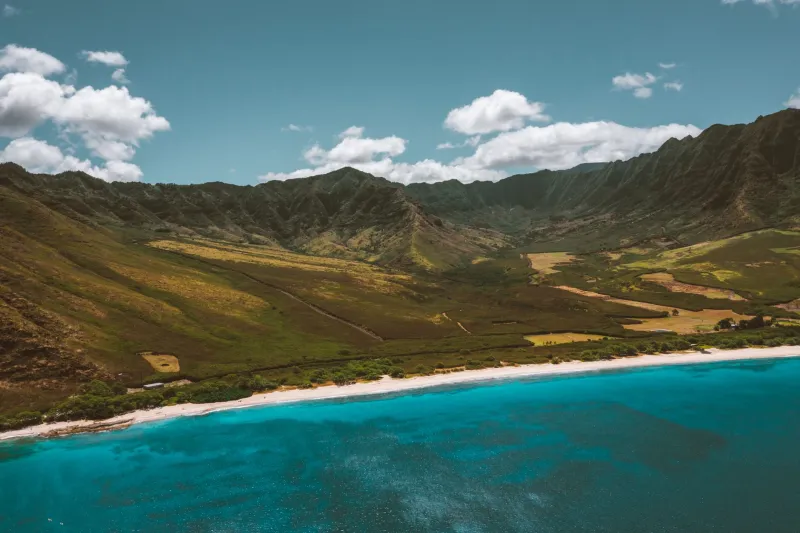
In the 1970s and again in the early 2000s, large-scale resort projects were proposed for the island's western and southern shores. Both times, community opposition — organized, vocal, and grounded in a deep sense of cultural kuleana (responsibility) — helped push those projects back. The west end remains largely undeveloped. The fishponds along the south shore, ancient structures built by Native Hawaiian hands centuries ago, are being restored rather than bulldozed.
Those choices have a cost. Molokai's unemployment rate consistently runs higher than the state average. Young people leave for jobs on the mainland or in Honolulu. The tax base is thin. The hospital is small. The grocery store sometimes runs out of things.
And yet.
What the Numbers Miss
Kanani Akana has run a small cultural tour business out of her family's home in east Molokai for eleven years. She's turned down partnership offers from Maui-based travel companies more than once. "They want me to scale," she says, laughing softly. "Scale what? My grandmother's stories? The fishpond I grew up swimming in? You can't scale that. The minute you try, it becomes something else."
Akana's tours are small — never more than six people — and she books them herself, mostly through word of mouth and a modest website. She earns enough to live on, help support her mother, and contribute to a local taro restoration project. By Silicon Valley standards, she's left an enormous amount of money on the table. By her own reckoning, she's doing exactly what she's supposed to be doing.
This is the informal economy that doesn't show up in state reports: the neighbor who fixes your truck in exchange for fish, the aunty who watches your kids while you work, the community garden that supplements a dozen families' tables. Economists have a term for this — social capital — but the word feels too sterile for what it actually is on Molokai. It's more like a web. Pull one thread too hard and the whole thing changes.
The Cost of "Progress" Next Door
It's worth asking what Molokai avoided. Maui, just a short ferry ride away, welcomed mass tourism with open arms starting in the 1960s. Today, the Road to Hana is choked with rental cars. Lahaina, before the devastating 2023 wildfire, had become more tourist corridor than living community. Native Hawaiian families have been steadily priced out of the coastlines their grandparents fished.
Oahu tells a similar story at a larger scale. Honolulu's housing market is among the most unaffordable in the United States. The cultural sites that remain are often experienced through a transactional lens — a performance, a luau package, a check-in photo.
Molokai has largely avoided this particular fate. The median home price, while rising, remains far below Maui's. Families who have lived on the island for generations can, in many cases, still afford to stay. The cultural knowledge held by elders hasn't been fully commodified into a tourism product — it still lives in kitchens, on fishing boats, in the language of people who use it every day.
That's not nothing. That's actually everything.
Redefining the Bottom Line
There's a concept in Hawaiian culture called pono — often translated as righteousness or balance, but more accurately described as a state of things being as they should be. A pono economy isn't necessarily one that grows the fastest or attracts the most outside investment. It's one that sustains the people and the land in right relationship with each other.
By that measure, Molokai is doing something remarkable.
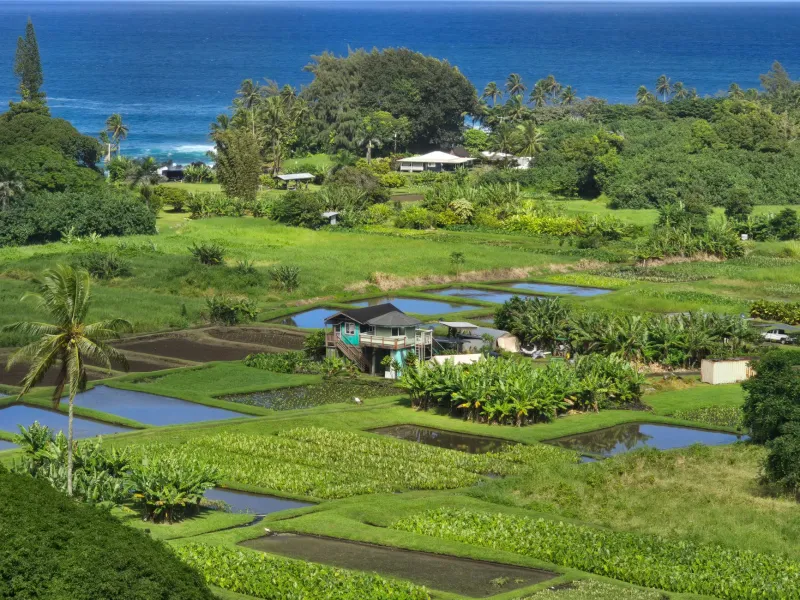
Local farmer James Kahananui, who grows taro on land his family has worked for four generations, puts it plainly. "People come here and they feel sorry for us sometimes. Like we need saving." He pauses, looking out at his lo'i (taro patch), the water reflecting the afternoon sky. "But I sleep good at night. My kids know where their food comes from. My neighbors know my name. I'm not sure what more I'm supposed to want."
That's not naivety. It's a sophisticated rejection of a value system that has proven, again and again, to hollow out the places it touches.
What Conscious Travelers Can Do
If you're coming to Molokai, come understanding that the island's "underdevelopment" is a feature, not a bug. Spend your money at locally owned businesses. Skip the rental car from a national chain if a local outfitter offers one. Eat at the plate lunch spot on the main drag, not the one that takes reservations three weeks in advance.
And maybe most importantly: resist the urge to fix anything. Molokai doesn't need your disruption, your startup idea, or your well-meaning suggestion about how the farmers market could scale on Instagram. It needs your presence, your respect, and your willingness to receive something that can't be packaged or optimized.
The island has already figured out the hard part. The question is whether you're ready to learn from it.