An Island That Said No: The Sacred Economics of Molokai's Quiet Resistance
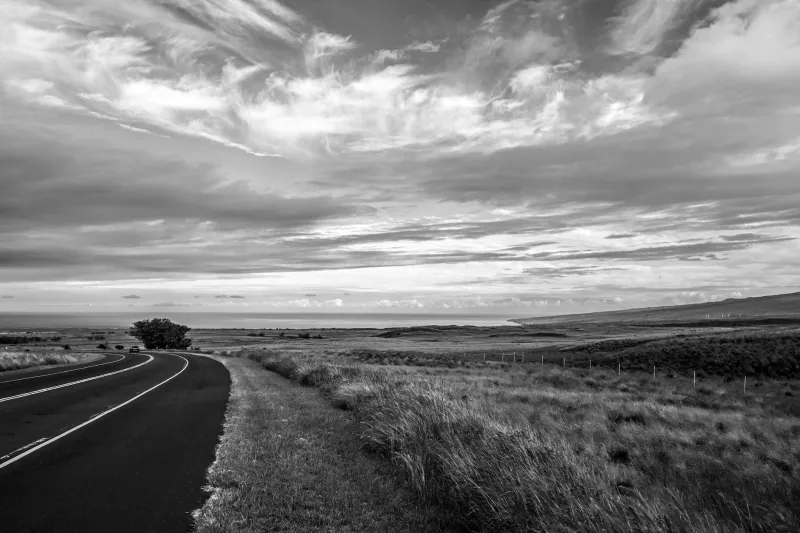
There's a moment that happens to almost every visitor who steps off the small prop plane at Hoʻolehua Airport. The baggage carousel — if you can call a single metal rack that — holds maybe a dozen bags. There's no Starbucks. No shuttle service with a branded logo. No concierge handing out coupons for sunset luaus. There's just the warm, heavy air and a stretch of open road that disappears into green.
For some travelers, the instinct is mild panic. For others — the ones Molokai seems to be waiting for — it feels like exhaling for the first time in months.
This is not an accident. Molokai's quietness is not a gap in the market. It's a decision, made collectively and fiercely, over decades. And depending on who you ask, it's one of the most spiritually coherent acts of community resistance in the entire United States.
The Vow Nobody Signed But Everyone Keeps
Monasteries operate on a set of principles — simplicity, intentionality, the rejection of excess — that outsiders often mistake for deprivation. From the outside, a monk's cell looks like poverty. From the inside, it looks like freedom.
Molokai functions with a similar paradox. The island has no traffic lights. No shopping malls. No high-rise hotels. The tallest structure on the island is arguably the water tower. When major resort developers came knocking in the 1970s and again in the early 2000s, the community pushed back — loudly, legally, and culturally. Protests were organized. Petitions circulated. Native Hawaiian families who had farmed and fished this land for generations made clear that their home was not inventory.
"People think we're behind," says one longtime Molokai resident whose family has lived on the island for five generations. "But we're not behind. We made choices. There's a difference between not having something and choosing not to have it."
That distinction is everything. Molokai isn't underdeveloped. It's deliberately, philosophically restrained — and that restraint is inseparable from the Hawaiian value of aloha ʻāina, a concept that translates roughly as love of the land but carries a weight that the English phrase barely holds. To love the land is to be responsible to it. To protect it. To refuse to sell it into something it was never meant to be.
Preservation as Prayer
In many religious traditions, the act of tending to sacred space is itself a form of worship. You don't have to be inside a cathedral for the work to be holy — sometimes the holiness is in the weeding, the mending, the refusal to let something sacred become something commercial.
On Molokai, you hear this framing again and again from residents who might not describe themselves as religious in any conventional sense but who speak about the land with a reverence that's unmistakably spiritual.
"When I go out to my lo'i [taro patch] in the morning, I'm not just farming," explains one kalo grower whose family has worked the same valley land for generations. "I'm continuing something. I'm saying, this matters. This is worth protecting. That's a prayer, even if I don't call it that."
The same logic applies to the island's resistance to development. Every time a resort proposal gets rejected, every time a community meeting fills with residents demanding that the shoreline stay accessible and uncluttered, it's a renewal of a kind of collective vow. We will not trade this for that. We know what this is worth.
That kind of communal discernment — the ability to look at a lucrative offer and say, clearly and without apology, no thank you — is genuinely rare in America. We're a culture that tends to equate growth with health, expansion with success. Molokai offers a counter-argument that's been running for decades and shows no signs of losing steam.
What Silence Actually Costs
Let's be honest about something: choosing simplicity isn't free. The same economy that feels oppressive in a resort town also pays teachers, funds clinics, and keeps grocery stores stocked. Molokai's median household income is significantly lower than the state average. The island has faced real challenges with unemployment, food access, and the loss of young people who leave for economic opportunity on Oahu or the mainland.
Residents are clear-eyed about this. The choice to resist commercialization has come with genuine sacrifice, and it would be romanticizing — even exploitative — for visitors to ignore that reality while celebrating the island's authenticity.
"We're not a museum," one community organizer puts it plainly. "We're not here to perform 'real Hawaii' for people who are tired of Waikiki. We're people trying to live our lives. And we happen to believe that protecting this place is part of that life."
This is a crucial corrective for conscious travelers who might be tempted to frame Molokai's resistance as purely idyllic. The spiritual practice of preservation is also, at times, a hardship. It requires ongoing negotiation, real economic tension, and a community that has to keep choosing its values over and over again — not just once, at some historic crossroads, but every year, every generation.
What Visitors Are Actually Walking Into
When you visit Molokai, you're not arriving at a destination that has been curated for your comfort. You're entering a living community that has made a series of difficult, principled choices — and your presence there is a kind of guest relationship that carries responsibility.
The island's implicit ask of visitors is similar to what any serious spiritual community asks of newcomers: come with humility, leave things better than you found them, and don't mistake the quiet for emptiness.
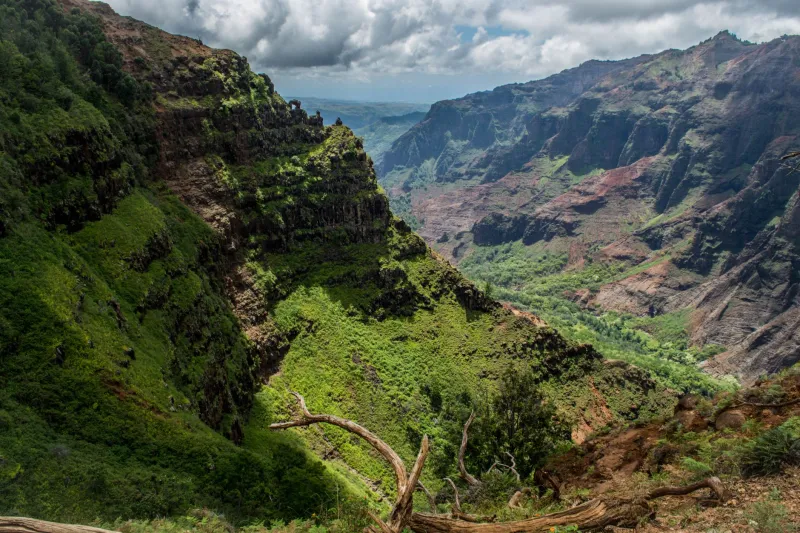
There's actually a great deal happening on Molokai. Cultural practitioners are working to restore traditional fishponds. Schools are teaching Hawaiian language to kids who will grow up speaking it fluently. Farmers are reclaiming lo'i that went fallow for generations. The island is not still — it's just not loud about its motion.
For mainland Americans especially, there's something almost countercultural about that orientation. We're trained to announce our progress, document our growth, broadcast our transformation. Molokai does its work quietly, which doesn't mean it isn't doing work.
The Lesson Restless Americans Keep Missing
Here's the thing about monastic life that the outside world consistently misunderstands: the point was never the deprivation. The point was the clarity that comes after you stop filling every moment with noise and acquisition.
Molokai offers a version of that clarity — not because it's a retreat center, not because it's been designed for spiritual tourists, but because a community of people has fought, for generations, to keep it from becoming something else.
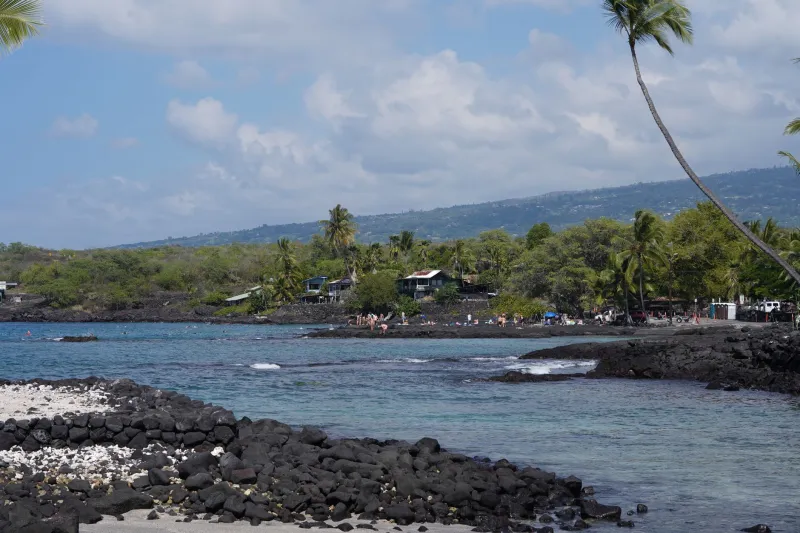
When you drive the single main road from one end of the island to the other, when you stop at a roadside stand for fresh fruit and end up in a twenty-minute conversation with the person selling it, when you watch the sun go down over the channel without a single resort light polluting the horizon — you're experiencing the outcome of that fight.
It looks like simplicity. It is, in fact, something much harder to achieve: a community that knows what it values and has been willing to pay the price to protect it.
That's not underdevelopment. That's discipline. And in a country that rarely says no to anything profitable, it might be the most radical spiritual practice currently operating on American soil.