Press Play Before You Land: A Hawaiian Music Primer for the Molokai-Bound Traveler
There's a particular kind of preparation that no itinerary can cover. You can book your flights, reserve a rental, map out the trailheads — but none of that will prepare you for the feeling of standing at the edge of Halawa Valley at dusk, or watching the sun drop behind Lana'i from the west end cliffs, or hearing an elder speak in Hawaiian to the fishpond like it's a living relative. That preparation comes from somewhere else.
It comes, at least in part, from music.
Hawaiian music is not background noise. It is a vessel for genealogy, for grief, for place names that hold entire histories inside them. For travelers headed to Molokai specifically — an island that wears its culture closer to the surface than almost anywhere else in the state — arriving with even a passing familiarity with this musical tradition is an act of respect. It signals that you came to receive, not just consume.
Here's where to start.
Start With the Classics: The Songlines of a Place
"Hi'ilawe" is one of the most recorded songs in Hawaiian music history, a mele (song) about a waterfall in the Big Island's Waipio Valley. But the reason it belongs on a Molokai playlist is what it teaches you about how Hawaiian songs work — how a landscape becomes a love song, how geography carries emotion. Listen to Gabby Pahinui's version first. His slack-key guitar playing is the sound of old Hawaii made physical, and it will recalibrate your nervous system in ways that are hard to explain but easy to feel.
Gabby Pahinui is the essential starting point for any traveler serious about understanding Hawaiian music's roots. His recordings from the 1940s through the 1970s capture a tradition that was, at that time, in real danger of disappearing. Molokai's cultural stubbornness has its musical equivalent in Gabby's refusal to modernize his sound for commercial appeal. Start with The Gabby Pahinui Hawaiian Band, Vol. 1.
The Hawaiian Renaissance and Why It Matters for Molokai
In the 1970s, the same cultural awakening that was reshaping Hawaiian politics and land rights was also reshaping Hawaiian music. The Hawaiian Renaissance brought artists like Olomana, Sunday Manoa, and Cecilio & Kapono to the forefront — musicians who were weaving traditional forms with contemporary sensibilities and, crucially, singing in Hawaiian at a time when the language itself was nearly extinct.
For Molokai travelers, this period is especially resonant. The island's resistance to development ran parallel to this cultural reclamation. Understanding the Renaissance helps you understand why Molokai feels the way it does — like a place that fought to remember itself.
Israel Kamakawiwo'ole, known universally as Braddah Iz, is perhaps the most globally recognized Hawaiian musician of this era. His medley of "Somewhere Over the Rainbow" and "What a Wonderful World" has been heard in movies, hospitals, and living rooms across the world. But his deeper catalog — songs like "Hawai'i '78" — carries a political and spiritual weight that will hit differently once you've spent time on Molokai. "Hawai'i '78" is essentially a lament for what Hawaii has lost to development, sung in the voice of the island's ancestors. It is devastating in the best possible way.
Contemporary Voices Tied to the Land
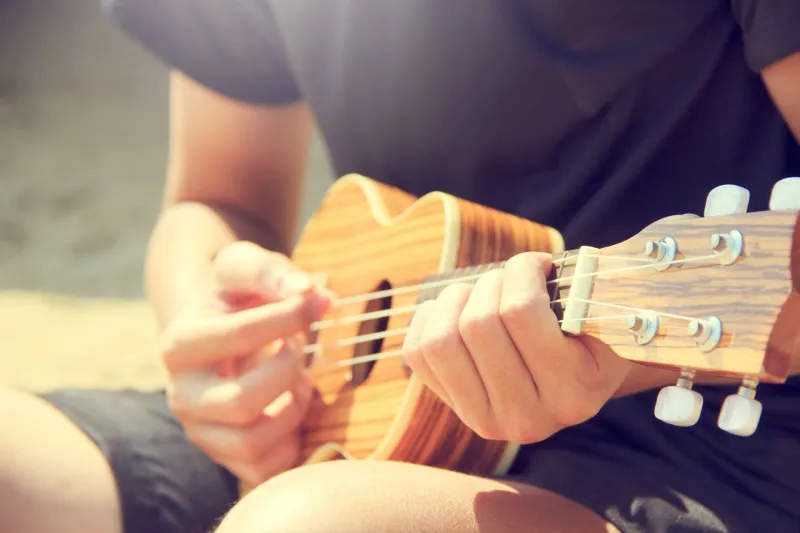
Taimane Gardner plays ukulele in a way that shouldn't be physically possible. Born and raised in Hawaii, her instrumental work draws on classical, flamenco, and traditional Hawaiian forms in equal measure. Her music doesn't narrate place so much as it becomes it — listen to her before you walk any of Molokai's coastal trails and notice how the two experiences start to rhyme.
Kalani Pe'a is one of the most important Hawaiian language musicians working today. His album E Walea won a Grammy in 2017, the first Hawaiian language album to do so in decades. Pe'a's work is devotional in the truest sense — his songs are acts of love for a language and a way of life that colonization tried to erase. Listening to him is a form of education that bypasses the intellect entirely.
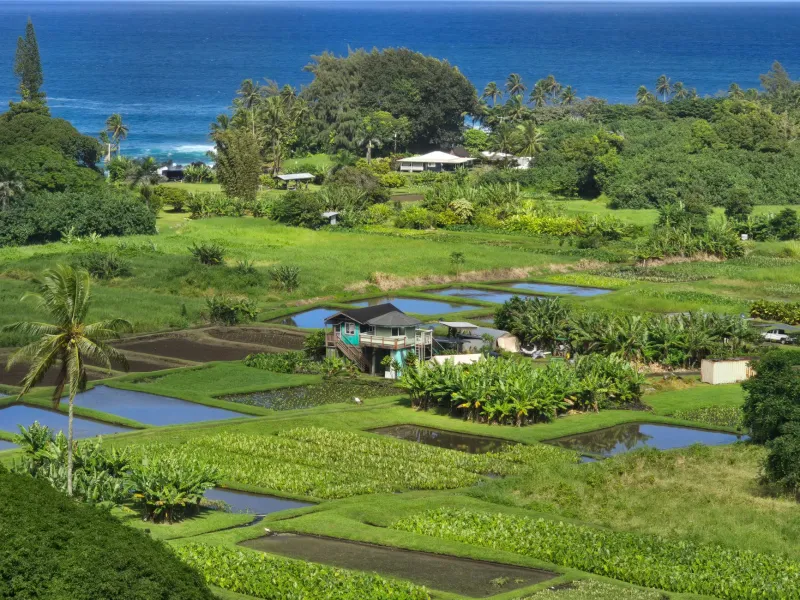
For something more rooted in Molokai's specific geography, seek out recordings connected to east Molokai and Halawa Valley. The valley, one of Hawaii's oldest continuously inhabited places, has inspired songs and chants that are still performed by cultural practitioners today. Ask at local cultural centers about events where you might hear this music performed live — that experience is worth more than any recording.
Songs for Specific Places
-
Kalaupapa: The former leprosy settlement on Molokai's north shore peninsula is one of the most spiritually charged places in all of Hawaii. Before visiting, listen to "E Ku'u Morning Dew" by Melveen Leed — a song about longing and separation that captures something of the profound grief and grace that defines Kalaupapa's history.
-
The south shore fishponds: Put on anything by George Kahumoku Jr. — his slack-key playing feels like water moving over stone. His music has the patience that the fishponds require of you.
-
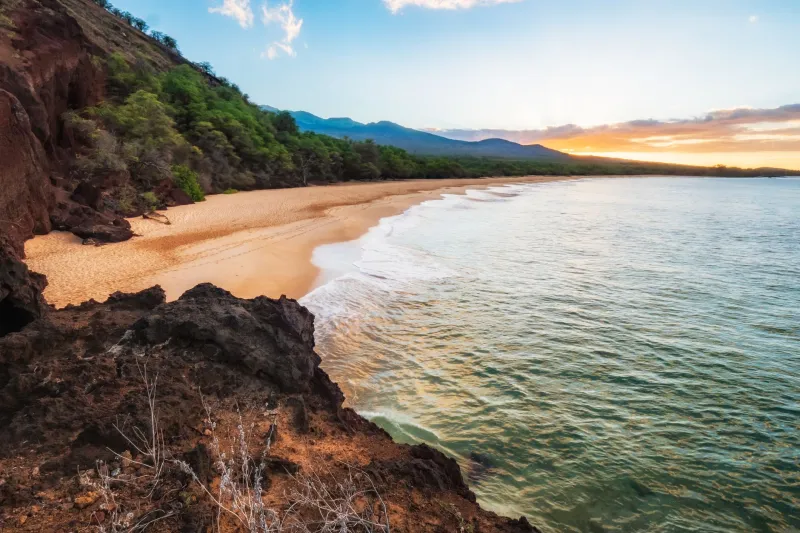
Molokai's west end cliffs: This is a landscape of scale and silence. Keola Beamer's solo guitar recordings, particularly from his album Wooden Boat, are built for open horizons.
How to Listen Respectfully
A word about engagement: Hawaiian music is not a commodity, even when it's available on streaming platforms. These songs carry genealogies, place names, and spiritual content that exists in relationship with specific land and people. As a visitor, you're a guest in that relationship.
This means a few things practically. Don't play Hawaiian music loudly in public spaces on the island — that's not your call to make. If you attend a live performance, put your phone down and actually listen. If a musician or cultural practitioner shares something with you about a song's meaning, receive that gift with care and don't immediately post it.
Local musician and cultural educator Leilani Kahale, who teaches Hawaiian language and music in Kaunakakai, frames it simply: "Our music is our history. When you listen, you're entering someone's family story. Act like a guest, not a tourist."
The Playlist as Preparation
Think of this listening as a kind of tuning — the way you'd tune an instrument before playing it. Molokai will ask something of you that most travel destinations don't. It will ask you to slow down, to pay attention, and to let the place teach you rather than the other way around. Music is one of the fastest routes into that receptive state.
So before you pack your sunscreen, before you download the offline maps, sit down with some Gabby Pahinui. Let Braddah Iz remind you what was lost and what was saved. Let Kalani Pe'a sing you into a language that the land itself still speaks.
You'll arrive different. That's the whole point.