When the Night Speaks: Understanding Molokai's Spiritual Encounters on Their Own Terms
Let's get one thing out of the way immediately: this is not that kind of ghost story.
There are no EVP recordings here, no night-vision cameras pointed at heiau (sacred sites), no amateur paranormal investigators treating a living culture's spiritual landscape like a haunted house attraction. If that's what you're looking for, Molokai will disappoint you — and honestly, it should.
What this island offers instead is something harder to categorize and far more profound: a place where the membrane between the physical world and the spiritual one feels genuinely, palpably thin. Where residents speak matter-of-factly about encounters that would make most mainland Americans reach for a rational explanation. And where Hawaiian cultural practitioners will tell you, with quiet authority, that the spirits aren't haunting this place. They belong here. We're the visitors.
A Different Framework Entirely
Western culture tends to approach the supernatural through one of two lenses: fear or debunking. Something inexplicable either needs to be explained away or it gets filed under "things that go bump in the night." Hawaiian spiritual tradition offers a third option, and it's the only one that makes sense in the context of Molokai.
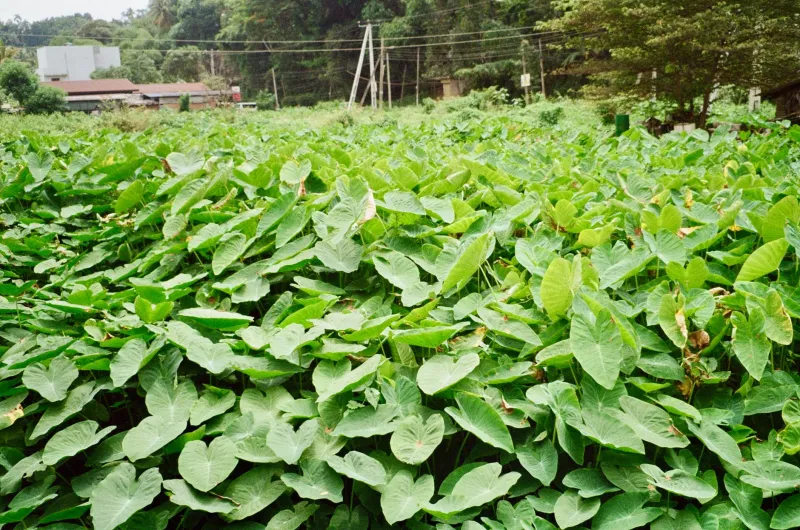
In the Hawaiian worldview, the boundary between the living and the ancestral dead — the 'aumakua, or family guardian spirits, and the akua, the divine forces that animate the natural world — is not a wall. It's a conversation. The ancestors didn't leave when they died. They changed form. They became the rain that feeds the taro, the shark that guides a fishing canoe home, the owl that appears at a crossroads when a decision needs to be made.
Molokai, more than almost any other Hawaiian island, has maintained the conditions for that conversation to continue. Less development means fewer of the spiritual sites have been disturbed. The cultural practitioners who tend to those sites are still here, still practicing, still maintaining relationships with forces that most of the modern world has stopped acknowledging.
When something happens on Molokai at night — when you hear footsteps on a trail no one else is walking, or see a light moving along the cliffs, or wake up with a feeling that something enormous and ancient just passed through your room — you are not losing your mind. You are, in all likelihood, receiving a transmission that this island has been sending for centuries.
What Residents Actually Experience
Molokai residents tend to talk about spiritual encounters with a casual directness that can be disorienting for mainlanders. There's no performative drama, no lowered voice. It's the same tone someone might use to describe seeing a rainbow.
One longtime resident of east Molokai, who asked to be identified only by her first name, Maile, describes growing up with what she calls "the night walkers" as simply a fact of island life. "My grandmother told me about them when I was small. She said they walk certain paths at night, the old paths, and you just don't cross those paths after dark. It's not scary. It's respectful. You wouldn't walk through someone's living room without being invited."
The "night walkers" she's referring to are known in Hawaiian tradition as the Huaka'i Pō — processions of ancestral spirits that travel ancient pathways, particularly on nights around the full moon. These are not malevolent forces. They are, by most accounts in Hawaiian oral tradition, the chiefs and warriors and healers of earlier eras continuing their journeys in a different form. The appropriate response is not fear. It's deference.
Another resident, a fisherman named Keoki who has worked the south shore waters for over thirty years, describes a recurring experience near one of the ancient fishponds. "Sometimes when I'm out early, before sunrise, I hear chanting. Not from anywhere specific, just... from the water. From the stones. My grandfather heard it too. He said it's the people who built the ponds, still tending them." He pauses. "I believe him."
Why Molokai in Particular
Hawaiian cultural practitioner and educator Haunani Akana, who has studied and taught traditional Hawaiian spirituality for decades, has a clear explanation for why Molokai seems to generate more of these experiences than other islands.
"Molokai was always known as a place of tremendous spiritual power," she explains. "The island was home to some of the most powerful kahuna (spiritual practitioners) in all of Hawaii. That knowledge, that energy — it doesn't just evaporate. It stays in the land. It stays in the stones. When you haven't paved over everything, when you haven't built a resort on top of a heiau, that power stays accessible."
She also points to the island's relative quiet. "The spiritual world communicates in frequencies that our modern lives drown out. On Molokai, it's still quiet enough to hear."
This is, in a very real sense, the same argument the island makes for everything else — its resistance to development has preserved not just its ecology and its culture, but its spiritual infrastructure.
Kalaupapa and the Weight of Collective Grief
No conversation about Molokai's spiritual presence is complete without acknowledging Kalaupapa. The remote peninsula on the island's north shore served as a forced isolation colony for people with leprosy (Hansen's disease) from 1866 until 1969. Thousands of people were torn from their families and sent here to die, many of them Native Hawaiian.
The grief embedded in that landscape is not metaphorical. Visitors to Kalaupapa — accessible only by permit, and only on guided tours — consistently report a heaviness, a sense of being watched, an emotional weight that descends before they've been told much of anything about the place's history.
Haunani frames it carefully: "Those people suffered. They also loved each other, built community, created beauty in impossible circumstances. What you feel there is all of that — not just the pain, but the full humanity. The land held it. The land holds it still."
Kalaupapa is not a place to visit casually or with a ghost-hunting mindset. It is a place to enter with profound humility and to leave having given something of yourself in return.
How to Be a Respectful Guest in a Spiritually Active Place
For conscious travelers, Molokai's spiritual landscape comes with real responsibilities. A few guidelines, drawn from conversations with cultural practitioners and longtime residents:
Don't photograph heiau or sacred sites without permission. Many of these sites are still actively used for ceremony. Treat them the way you'd treat a church during a service.
If something happens, don't sensationalize it. If you have an experience that feels spiritually significant, sit with it. Journal it. Talk to a local cultural practitioner if one is available and willing. Don't post it on Reddit.
Follow local protocols around nighttime. If a local tells you not to be somewhere after dark, believe them. This isn't superstition. It's accumulated generational knowledge about how to live in right relationship with this particular place.
Bring offerings, not cameras. If you visit a sacred site, bring something — a flower, a stone from your own home, a moment of genuine prayer or intention. Leave something of yourself rather than taking something away.
The Invitation
Molokai's spiritual presence is not a tourist attraction. It's not a selling point. It is simply what happens when a community refuses to let the old world be entirely paved over.
If you come here open — genuinely open, not performatively open — the island will meet you. Maybe in a sound you can't source. Maybe in a feeling that settles over you at dusk on the south shore. Maybe just in a dream that feels more like a memory.
The ancestors of this place have been receiving visitors for a very long time. They know the difference between someone who came to take and someone who came to learn.
Be the second kind.