The Living Library: How Molokai Became the Quiet Keeper of What Hawaii Can't Afford to Lose
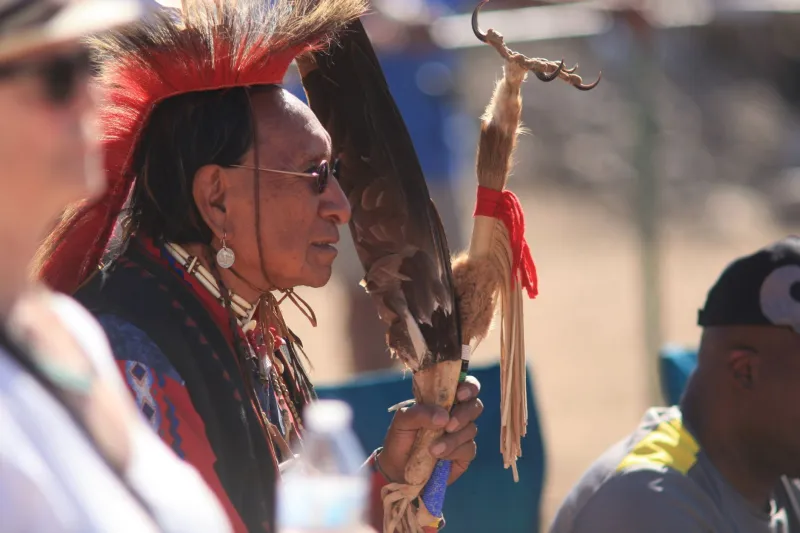
There is a particular kind of knowledge that doesn't live in books. It lives in bodies — in the precise angle of a dancer's wrist, in the pronunciation of a word that carries centuries of meaning, in the way an elder's hands move when they're explaining something that has no direct translation. This is the knowledge that colonization targets first, because it's the hardest to suppress and the hardest to reconstruct once it's gone.
On most of the Hawaiian Islands, the work of cultural recovery is exactly that — recovery. Reconstruction. The painstaking reassembly of practices that were interrupted, suppressed, or diluted across generations of outside pressure. That work is vital and ongoing, and the people doing it are extraordinary.
On Molokai, something different has been possible.
An Unbroken Thread
Molokai has the highest percentage of Native Hawaiian residents of any island in the state — roughly 60 percent of its small population, depending on how ancestry is counted. That demographic fact is not incidental. It's the foundation of everything.
When a community retains its people, it retains its knowledge. The elders who carry the old protocols didn't have to reconstruct them from archival research. They learned them from their elders, who learned from theirs. The chain of transmission, while never perfectly intact anywhere, has remained more continuous on Molokai than almost anywhere else in the archipelago.
This is especially visible in the island's relationship to the Hawaiian language. While Hawaiian language revitalization is happening across the state through immersion schools and university programs, Molokai has something different: communities where Hawaiian is woven into daily life not as a revived practice but as an inherited one. You hear it at the store, at the harbor, at family gatherings. For many residents, it is simply the language of home.
Molokai as the Mother of Hula
The island's cultural significance extends deep into the history of hula itself. According to Hawaiian tradition, the goddess Laka — the patron of hula — is said to have first danced on Molokai, on the hill of Kaana near the island's center. This makes Molokai not just a place where hula is practiced, but a place where hula originated, at least in the spiritual geography of the tradition.
That origin story carries weight. Hula hālau (schools) from across the Hawaiian Islands have made pilgrimage to Molokai to honor this connection. The island's own hālau maintain practices and chants that reflect this deep rootedness — not as performance for tourists, but as living ceremonial tradition.
Visitors should understand: when hula happens on Molokai, it is rarely for your benefit. It is an act of cultural continuity, of prayer, of relationship between the living and the ancestral. Being present for it — if you're ever fortunate enough to be invited into that space — is a profound privilege that comes with responsibilities.
Protocol as a Living Practice
One of the most significant things Molokai preserves is something that's almost impossible to download: proper protocol for engaging with the sacred.
Hawaiian culture has deeply developed systems of protocol — ways of entering a space, addressing an elder, approaching a heiau (sacred site), receiving food or knowledge, and departing respectfully. These protocols aren't arbitrary rules. They reflect a worldview in which every interaction is a relationship, and every relationship carries obligations.
On islands dominated by mass tourism, this protocol has often been compressed, simplified, or bypassed entirely in the interest of accessibility and throughput. On Molokai, it remains more intact. Residents will notice — and remember — whether you greeted someone properly, whether you asked before photographing, whether you approached a sacred site with awareness or wandered through it like a theme park.
This isn't about catching visitors out. It's about a community that hasn't given up on the idea that cultural interaction should be mutual and meaningful.
What the Slower Pace Makes Possible
Molokai's cultural preservation isn't separate from its resistance to mass tourism — it's a direct consequence of it. When an island doesn't have thousands of visitors moving through daily, knowledge keepers aren't overwhelmed. Elders have time for real conversations. Sacred sites aren't eroded by foot traffic. The community's energy isn't consumed by the service economy.
The slower pace creates space for the kind of transmission that can't be rushed. A kupuna (elder) teaching a grandchild to weave lauhala or identify medicinal plants requires unhurried time. A hālau preparing for a competition or ceremony needs the community's collective attention. These things happen on Molokai with a regularity that would be impossible on a busier island.
For visitors, this means that what you encounter here — if you're patient enough to encounter it — is more likely to be genuine than curated, more likely to be rooted than performed.
How to Show Up as a Responsible Witness
If you're coming to Molokai with any intention of engaging with the island's cultural depth, a few principles are worth carrying with you.
Ask before you assume. Whether it's photographing someone, joining a gathering, or visiting a site you've read about, asking permission is not a formality. It's a demonstration that you understand this place belongs to its people.
Learn the basics before you arrive. Familiarize yourself with the concept of kapu (sacred restriction), understand that some sites and practices are not open to visitors, and know enough Hawaiian to offer a genuine greeting. Aloha is not a brand. It's a way of being.
Support the cultural economy directly. If you attend a cultural event, buy from Hawaiian artists and craftspeople, or take a tour led by a community member, you're contributing to the economic conditions that allow cultural work to continue. This matters.
Let silence be an answer. If someone declines to share something, or redirects your question, honor that. Not all knowledge is meant to be accessible to everyone. The boundary itself is a form of cultural integrity.
Stay longer than you planned. The kind of cultural understanding that's available on Molokai doesn't arrive in a weekend. It requires time, repetition, and the willingness to be changed by what you encounter. The island rewards the visitor who slows down enough to actually listen.
Why This Matters Beyond Hawaii
Molokai's role as a cultural keeper matters far beyond its small geography. In an era when indigenous languages are disappearing at catastrophic rates globally, when traditional ecological knowledge is being lost faster than it can be documented, and when the pressures of economic development continue to erode the conditions that make cultural continuity possible — Molokai represents something rare and instructive.
It shows what becomes possible when a community retains enough sovereignty over its own pace, its own land, and its own choices to keep the old knowledge alive. Not in a museum. Not in an archive. In living, breathing, daily practice.
That's not a small thing. That's a miracle worth traveling carefully to witness.