Loving a Place Enough to Protect It From Yourself: Molokai's Long War Against the Resort Machine
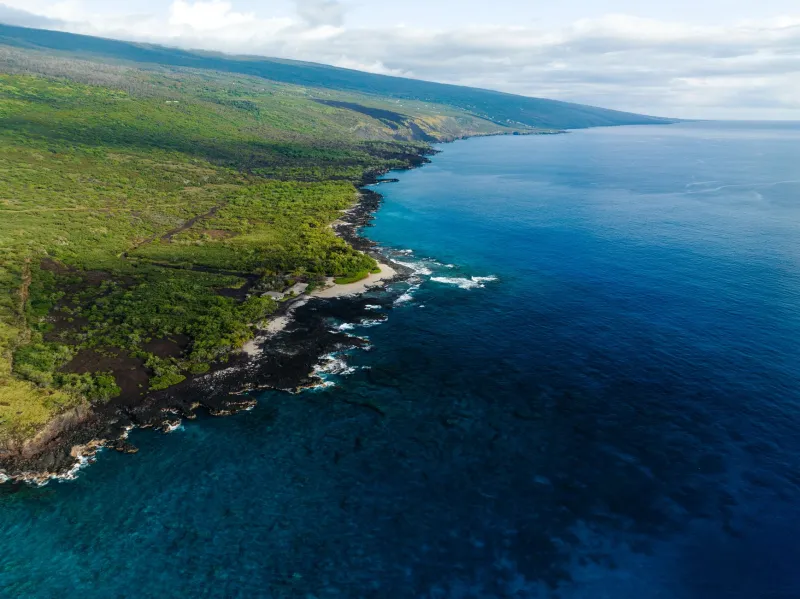
There's a moment that happens to a lot of first-time visitors to Molokai. You step off the small prop plane, scan the horizon for the familiar silhouettes of resort towers, the glow of a hotel pool, the shuttle van with the logo on the side — and you find none of it. Just wind. Just ironwood trees. Just the unhurried rhythm of an island that has, very deliberately, chosen to remain itself.
That choice didn't happen by accident. It was fought for, argued over in community meetings, and defended across decades of pressure from developers, investors, and well-meaning outsiders who believed they knew what was best for this place. Understanding why Molokai said no — and keeps saying it — is essential to understanding the island at all.
The Offers That Kept Coming
Molokai has faced repeated waves of development interest since the 1970s. Proposals for large-scale resorts, luxury housing communities, and expanded tourism infrastructure have arrived with the regularity of trade winds. The pitch is always roughly the same: jobs, investment, economic revitalization for one of Hawaii's most economically modest communities.
And each time, the community has pushed back.
The most visible battleground was the proposed expansion of the Kaluakoi resort area on the island's west end — a project that, at various points, envisioned thousands of new hotel rooms, golf courses, and the kind of visitor infrastructure that would have fundamentally altered the island's character. Community opposition was fierce and sustained. Residents showed up to hearings, organized, and ultimately prevailed in keeping the development footprint small.
More recently, debates over vacation rental proliferation and outside land purchases have kept the conversation alive. The specific proposals change. The community's answer stays largely the same.
It's Not Anti-Progress. It's Pro-Survival.
It would be easy — and wrong — to frame Molokai's resistance as simple stubbornness or fear of change. The people leading these fights aren't opposed to economic wellbeing. Many of them are working incredibly hard to build it through fishing, farming, small business, and community-based enterprises. What they're opposed to is a specific kind of development that has a well-documented track record across the Hawaiian Islands: it comes in, it transforms the cultural landscape, it drives up land prices, it displaces the people it claimed to help, and it leaves behind an economy so dependent on outside visitors that the community loses its own coherence.
They've watched it happen on Maui. On Oahu. Even on parts of the Big Island. Molokai has had a front-row seat to what large-scale tourism does to a Hawaiian community's ability to stay Hawaiian — and the view has not been encouraging.
"The land is not a product," one longtime community organizer told me during a conversation near the island's eastern shore. "Once you start treating it like one, everything that makes this place worth coming to starts to disappear."
The Spiritual Logic Behind the No
In Hawaiian tradition, the relationship between people and land isn't transactional — it's familial. The concept of mālama ʻāina, often translated as caring for the land, carries the weight of a sacred obligation. You don't exploit family. You don't monetize it beyond what's needed. You tend to it, and it tends to you.
Molokai has a particularly deep relationship with this principle. The island is considered one of the most spiritually potent in the Hawaiian archipelago — home to powerful heiau (sacred sites), ancient fishponds that still feed communities, and valleys that hold the memory of entire civilizations. To open that landscape to mass tourism isn't just an economic or environmental decision. It's a spiritual one.
Local kahu (spiritual practitioners) have spoken publicly about the need to protect the island's mana — its spiritual power — from the kind of dilution that comes with commodification. When a place becomes primarily a backdrop for other people's experiences, something essential about it begins to erode. Molokai's leaders, both formal and informal, have understood this intuitively for generations.
What It Costs — and What It Preserves
Let's be honest about the tradeoffs. Molokai is one of the most economically challenged islands in the state. Unemployment has historically run higher than the statewide average. Young people sometimes leave because opportunity feels limited. The infrastructure — roads, medical facilities, grocery options — reflects decades of underinvestment.
These are real costs, and they fall disproportionately on the people who can least afford to absorb them. Anyone who romanticizes Molokai's development resistance without acknowledging this is telling an incomplete story.
But here's what the resistance has preserved: a community where multi-generational Hawaiian families still live on land their grandparents lived on. A place where the Hawaiian language is spoken in daily life, not just in cultural programs. Where children grow up knowing how to fish the same reefs their ancestors fished. Where the social fabric — the ʻohana networks, the mutual aid, the shared sense of responsibility to place — remains largely intact.
Those things are not small. In the context of what has happened to indigenous communities across the United States and across the Pacific, they are extraordinary.
What Conscious Travelers Owe This Place
If you're reading this, you're probably not a developer. But you're also not neutral. Every visitor to Molokai participates, in some small way, in the ongoing negotiation between the island and the outside world.
The question worth sitting with isn't just "how do I have a good experience here?" It's "how do I show up in a way that contributes to this community's ability to remain itself?"
That means staying in locally owned accommodations. Buying from local farmers and vendors. Not pushing for experiences the community hasn't offered. Respecting the pace, the quiet, and the boundaries — spoken and unspoken — that make this place what it is.
Molokai's "no" to development is, at its core, a love letter to future generations of Hawaiian people. It's saying: we are worth more than the revenue we can generate. We are worth preserving as we are.
The least a conscious traveler can do is honor that letter — and resist the urge to be another form of extraction dressed up as appreciation.