More Than Myth: How to Approach Molokai's Spiritual Landscape Without Turning Sacred Ground Into a Story
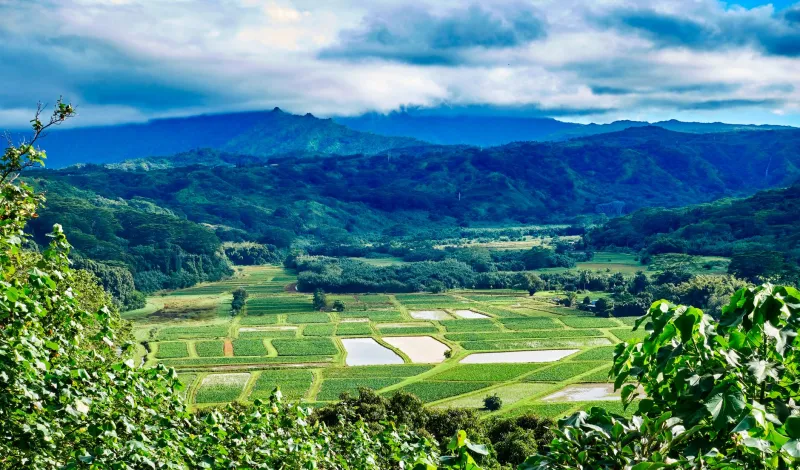
Somewhere along the way, Molokai acquired a reputation. You'll hear it whispered in travel forums, mentioned in hushed tones by visitors who came back changed, and acknowledged — with a mixture of pride and wariness — by residents who've lived with it their whole lives.
The island, people say, is alive in a way that goes beyond the usual sense of the word. Things happen here. Presences are felt. The land responds.
How you engage with that claim says a lot about what kind of traveler you are.
What the Reputation Is Actually Based On
Molokai's spiritual intensity isn't a marketing invention or a piece of tourist folklore. It has deep, specific, historically grounded roots.
The island has been a center of Hawaiian spiritual practice for centuries. Molokai was known throughout the archipelago as a seat of powerful kahuna — practitioners of Hawaiian healing, prayer, and ritual knowledge. The island's ali'i (chiefly class) were regarded with particular reverence, and certain valleys and coastal areas were considered so sacred that access was strictly governed by kapu (the system of sacred prohibitions that structured Hawaiian society before Western contact).
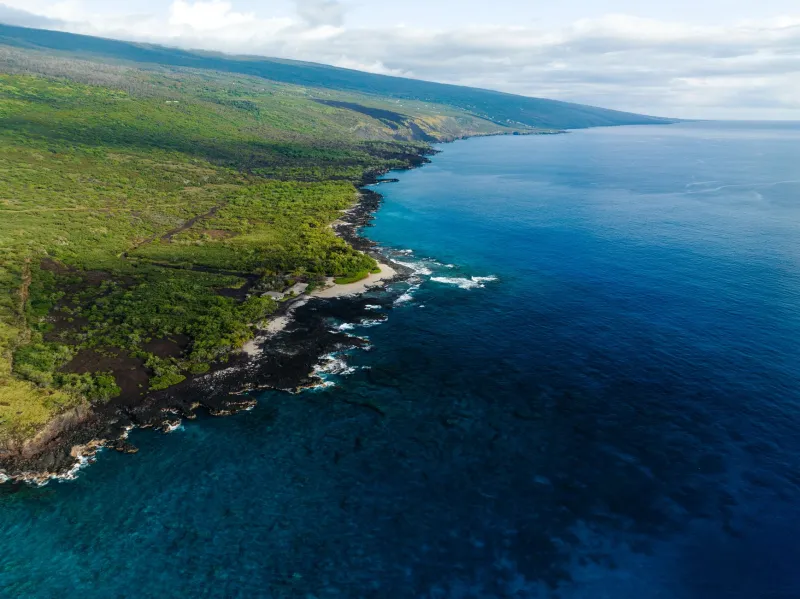
The north shore sea cliffs, among the tallest in the world, hold valleys — Wailau, Pelekunu, Halawa — that were inhabited for over a thousand years and that still carry the accumulated spiritual weight of that occupation. Heiau (sacred stone platforms) are scattered across the island, some of them still active in the sense that Native Hawaiian practitioners continue to work with them today.
This isn't ancient history in the sense of being over. It's ancient history in the sense of being continuous — alive in the land, in the families who have never left, in the practices that survived colonization precisely because Molokai resisted assimilation more stubbornly than almost anywhere else in Hawaii.
The Difference Between Encounter and Consumption
Here's where it gets delicate, and where it's worth slowing down.
There is a version of engaging with Molokai's spiritual reputation that is extractive — that treats the island's mystery as content, its sacred stories as entertainment, its spiritual encounters as Instagram captions. This approach is not only disrespectful; it actively misunderstands the nature of what's being engaged with.
Hawaiian spiritual belief is not a collection of ghost stories. The concept of 'āina — land as a living, relational, ancestral presence — is a sophisticated philosophical and ecological framework that has sustained a civilization for over a thousand years. The ancestors who are said to remain present in certain places aren't spooky characters in a local legend. They are, in Hawaiian understanding, real presences with whom living descendants maintain ongoing relationships of reciprocity and respect.
When visitors arrive looking for a paranormal experience, they're not just being culturally insensitive. They're fundamentally misreading what they're encountering.
What Proper Protocol Actually Looks Like
If you're non-Hawaiian and you're drawn to the spiritual dimensions of Molokai — and many people are, and that draw isn't wrong in itself — there are ways to approach it that honor rather than exploit.
Ask before you go anywhere. This sounds basic, but it matters enormously. Before visiting any area with known sacred significance, find out whether visitors are welcome, and under what conditions. Some places are open. Some are not. The answer isn't always posted on a sign.
Don't take anything. Not rocks, not plants, not soil. This isn't just a superstition — it's a matter of respect for the living ecology of a place, and for the spiritual protocols that govern it. The stories about people who removed things from Hawaiian sacred sites and suffered consequences afterward are numerous enough that they deserve more than dismissal.
Listen more than you speak. If a local person shares something about a place or an experience with you, receive it as a gift rather than a data point. Don't push for more. Don't try to fit it into a framework you brought from somewhere else.
Sit with not knowing. Some of what you encounter on Molokai won't be explicable in terms you're comfortable with. The appropriate response to that isn't to explain it away, and it isn't to dramatize it. It's to hold it with respect and leave it where you found it.
What Visitors Sometimes Experience
People do have experiences on Molokai that they struggle to account for in ordinary terms. Feelings of being watched in places where no one else is present. Dreams that seem to carry specific messages. A sense, in certain valleys or on certain trails, of walking through something thicker than air — some quality of presence that doesn't have a name in English.
Residents and Native Hawaiian practitioners don't find these reports surprising. They don't find them dramatic, either. In the Hawaiian worldview, the presence of ancestors in the landscape is simply a feature of reality — not supernatural so much as natural in a way that Western frameworks don't have good tools for.
The respectful thing, when these experiences happen to you, is not to broadcast them, not to seek validation for them, and not to build a personal narrative around them that centers your own reaction over the place and people whose home this is.
Have the experience. Be changed by it, if you are. And then be quiet about it in the ways that matter.
The Knowledge That Isn't Yours to Take
One of the most important things a conscious traveler can bring to Molokai is an acceptance that some knowledge isn't available to them — and that this is not a problem to be solved.
Hawaiian spiritual practice carries layers of meaning that require lineage, language, relationship, and years of learning to access properly. Visitors who arrive expecting to get the full picture in a week, or who try to piece together a spiritual education from books and blog posts and conversations with strangers, are working with a fundamental misunderstanding of how this knowledge lives and moves.
The gift that Molokai actually offers non-Hawaiian visitors isn't access to its deepest mysteries. It's the experience of being in the presence of a living culture that has protected those mysteries carefully, that has kept something intact against enormous pressure, and that can teach you — if you're willing to learn — what it looks like to treat the land, the ancestors, and the living community as sacred.
That's not a lesser gift. For most of us, coming from a culture that has largely forgotten how to hold anything as truly sacred, it might be the most important thing we ever receive.
Come with open hands. Leave with less certainty than you arrived with.
That's not a failure. On Molokai, that's exactly the point.