When the Island Chooses You: Stories from the Travelers Who Never Made It Back to the Mainland
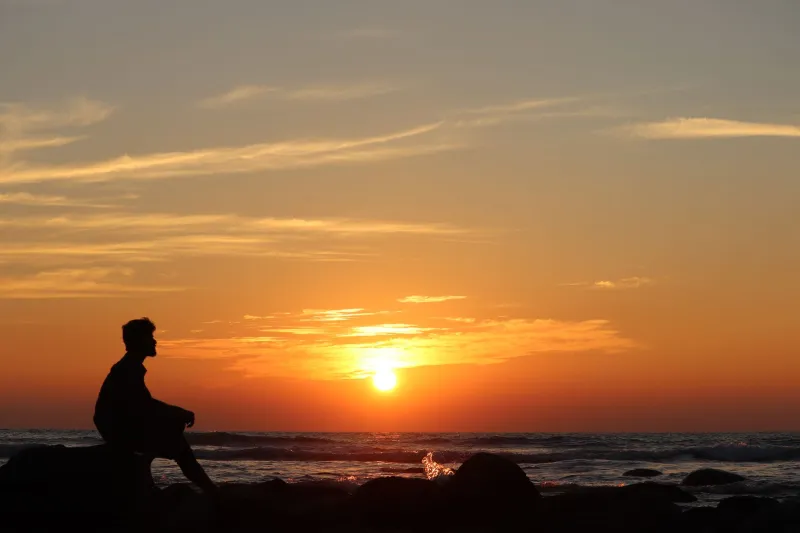
There's a joke that circulates quietly among the people who live on Molokai — the ones who showed up with a return ticket and a vague sense of adventure, only to find themselves, two years later, still there, tending a small garden, learning to pronounce place names correctly, and quietly wondering how they ever thought they could leave.
The joke goes: Molokai doesn't let you go. It just waits until you stop trying.
Like most jokes about this island, it isn't entirely a joke.
The Pull That Doesn't Show Up in Guidebooks
Ask anyone who stayed longer than they planned, and the explanation tends to start the same way — with an absence of explanation. A woman named Renee, who came from Portland for ten days in 2019 and didn't leave until well into 2021, described it this way: "I kept having reasons to stay one more week. The flight got rescheduled. Then I found a cheap place to rent. Then I just... stopped looking for reasons."
That's the thing about Molokai's pull. It doesn't announce itself. There's no single transcendent moment, no dramatic conversion. It's quieter than that — more like a slow loosening. The knot you didn't know you'd been carrying in your chest starts to untie itself somewhere around day three, and by day seven, the idea of sitting in mainland traffic feels genuinely incomprehensible.
Other Hawaiian islands have their own magnetic quality, obviously. But Molokai operates differently. There are no mega-resorts to absorb your attention. No curated sunset cocktail experiences competing for your evening. What the island offers instead is unmediated presence — yours, and its own. That combination turns out to be more powerful than most people expect.
What the Long-Termers Actually Say
Spend time talking to the people who stayed, and a few themes keep surfacing.
The first is community. Molokai runs on a scale where human connection still functions the way it was designed to — face to face, across generations, with accountability and warmth baked in. Marcus, a former tech worker from Austin who arrived in 2017 for what he called "a detox trip," described going to a local gathering and being handed a plate of food by someone he'd never met, who then introduced him to their grandmother, who told him a story about the land he was sitting on. "That doesn't happen anywhere else I've ever been," he said. "Not like that. Not that genuinely."
The second theme is the land itself. Molokai's 'āina — a Hawaiian concept that means land as a living, relational force rather than real estate — has a presence that long-term residents describe in terms that sound almost like a relationship. You start to feel the island's moods. You learn which valleys hold certain kinds of quiet. You notice what the wind is doing and what that means for the day ahead. This attunement doesn't happen on a long weekend. It requires time, and Molokai seems to know that.
The third theme, and maybe the most important, is the concept of belonging on the island's terms. This isn't a place that flatters visitors or performs itself for outside consumption. If you're here, you're expected to show up honestly — to contribute, to learn, to be humble about what you don't know. For people who've spent their mainland lives performing productivity and achievement, that expectation is weirdly liberating. There's no version of yourself to maintain here. You just have to be present and real.
The Difference Between Tourism and Belonging
This is where it gets uncomfortable, and it's worth sitting with the discomfort.
Molokai's Native Hawaiian community has fought hard — and continues to fight — to protect this island from the kind of development and mass tourism that has transformed other parts of Hawaii beyond recognition. That fight is ongoing. And one of its quieter tensions involves the question of who gets to stay, and what it means when someone from the mainland falls in love with a place and decides to make it their home.
Belonging isn't the same as staying. The long-termers who seem to have found genuine rootedness here are almost universally the ones who approached the island with humility — who understood that their presence was a privilege, not a right, and who invested themselves in the community's wellbeing rather than just their own experience. They learned. They gave back. They listened more than they talked.
The ones who treated extended stays as a kind of extended vacation, importing their mainland values and expectations wholesale, tended not to last — or to last in a way that created friction rather than connection.
Molokai doesn't want to be a refuge for people running away from their lives. It wants — if a place can be said to want anything — people who are willing to build something here. That's a meaningful distinction.
What Letting a Place Choose You Actually Feels Like
If you're reading this on a laptop in a city somewhere, trying to decide whether Molokai is worth a trip, here's what the long-termers would probably want you to know.
Come with space in your schedule. Not just free time — actual spaciousness. Room to sit still. Room to get a little bored. Room to let the island show you what it wants to show you instead of running a checklist of sights.
Come without a fixed idea of what the experience should look like. The people who get the most from Molokai — whether they stay a week or a decade — are almost always the ones who arrived with open hands instead of an itinerary.
And if you find yourself, somewhere around day five or six, doing the mental math on how long it would take to find a place to rent — pay attention to that. It might just be wanderlust. Or it might be the island tapping you on the shoulder, asking if you're ready to stop being a visitor.
Some people say no. They go home, and they carry Molokai with them in the specific way you carry something you left behind on purpose.
Some people say yes.
Those are the ones with the best stories.