Eight Things Molokai Will Take From You (Pack Light — You Won't Want Them Back)
Most travel is additive. You arrive somewhere and things get layered on — experiences, excursions, cocktails, content. You leave heavier than you came, in every sense.
Molokai works the other direction.
This island is a subtractive experience. It quietly removes things — distractions, expectations, the low-grade performance anxiety of modern life — and leaves you with something harder to name but impossible to mistake. Call it clarity. Call it presence. Call it your actual self, finally audible again.
But first, you have to be willing to lose a few things. Here's what's going on the chopping block.
1. Your Sense of Urgency
Molokai runs on what locals sometimes call "Molokai time" — a rhythm that has nothing to do with your itinerary app. The single traffic light on the island blinks yellow. The grocery store closes when it closes. The fisherman at the harbor doesn't rush his story to accommodate your schedule.
At first, this is maddening. Then it's disorienting. Then, somewhere around day two or three, something in your chest unclenches, and you realize you've been operating at a speed that was never actually necessary. The urgency you carried here wasn't productive. It was just noise.
What fills the space: actual time. Unstructured, unhurried, genuinely yours.
2. The Need to Document Everything
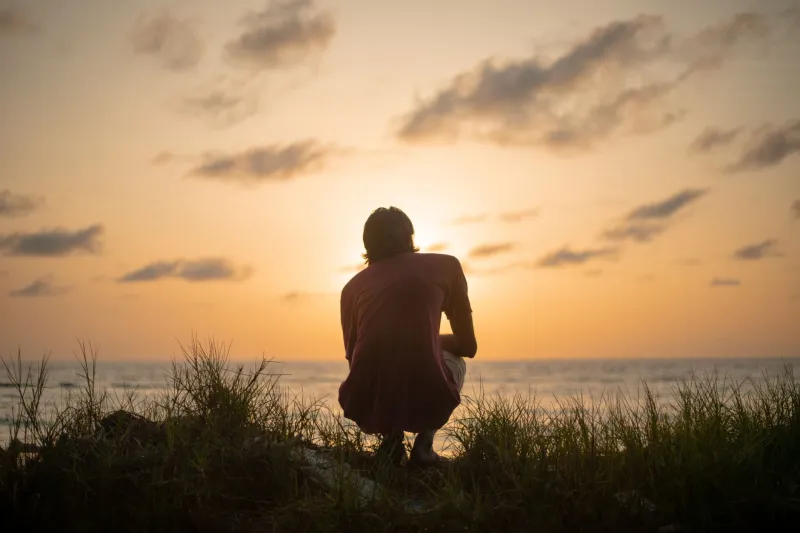
When your phone signal is unreliable and your audience is effectively offline, something interesting happens — you stop performing your experience and start having it. The sunset over the Pailolo Channel becomes something you watch with your eyes instead of your camera. The conversation with the uncle selling fruit on the roadside becomes a memory you hold in your body instead of a story you format for strangers.
Molokai doesn't ban photography. But it has a way of making the impulse feel less urgent, less automatic. You start asking yourself: who am I capturing this for? And sometimes the honest answer is: nobody. Just me. Just now.
What fills the space: memories that belong entirely to you.
3. The Illusion That Luxury Equals Rest
America has done a number on us with the idea that rest requires a thread count and a turndown service. Molokai has no luxury resorts. The accommodations here are modest — vacation rentals, small inns, a handful of locally owned spots with more character than amenities.
And yet, people consistently report sleeping better on Molokai than anywhere they've been. The air is different. The dark is real — no light pollution bleeding through the curtains. The quiet is actual quiet, not the managed silence of a resort with thick walls and white noise machines.
Rest, it turns out, isn't a product. It's a condition. And Molokai creates it more naturally than any five-star property.
What fills the space: sleep that actually repairs something.
4. Your Carefully Curated Food Identity
If you arrive on Molokai with strong opinions about farm-to-table dining and artisan coffee culture, the island will gently dismantle them. Restaurant options are limited. The menu at the plate lunch spot doesn't change for dietary preferences. The coffee is whatever's available.
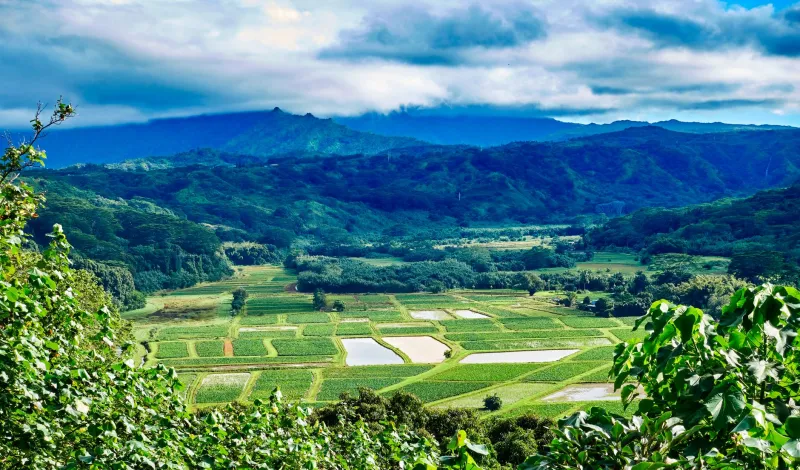
But here's the thing: the food on this island is often extraordinary in a way that has nothing to do with presentation. The fish was caught this morning by someone you might meet later. The taro came from a lo'i (flooded field) that's been cultivated for generations. The fruit from the roadside stand was picked an hour ago.
Eating on Molokai reconnects you to the radical idea that food is about nourishment and relationship, not curation.
What fills the space: genuine gratitude for what's in front of you.
5. Your Productivity Guilt
Modern vacation culture has a dark passenger: the nagging sense that you should be doing something. Optimizing. Achieving. At minimum, coming back with a tan and a hobby. Molokai makes productivity guilt very difficult to maintain because the island offers so few venues for performing busyness.
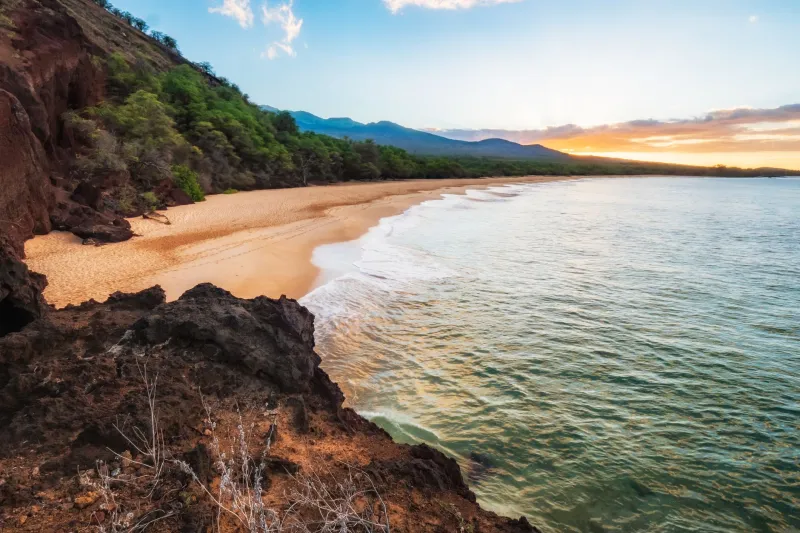
There's no spa schedule to fill. No excursion roster. No rooftop yoga class at 7 a.m. There is, however, a long stretch of empty beach where you can sit for two hours and watch a monk seal sleep on the sand. There are trails that reward slowness. There is a pace of life that says: your value is not your output.
For a lot of visitors, this is profoundly uncomfortable at first — and then profoundly healing.
What fills the space: permission to simply be.
6. The Assumption That You're the Main Character
Consumer travel puts you at the center of the story. The destination exists for your enjoyment. The locals are supporting cast. The culture is backdrop.
Molokai quietly and firmly corrects this. The community here is not oriented around your visit. People are living full, complex, deeply rooted lives that predate your arrival and will continue after your departure. The island has its own story, its own priorities, its own sacred logic.
Getting humble about your role — understanding that you're a guest in something much larger and older than your vacation — isn't a loss of agency. It's a gain of perspective that most of us badly need.
What fills the space: genuine curiosity about lives other than your own.
7. Your Fear of Silence
America is terrified of silence. We fill every gap with podcasts, playlists, notifications, background television. We've forgotten what silence actually sounds like — and more importantly, what it feels like.
On Molokai, silence is not an absence. It's a presence. At night, away from the small cluster of Kaunakakai's lights, the quiet has texture and depth. It carries the sound of the ocean, the wind through the trees, occasionally the bark of a dog or the call of a bird. It does not carry the ambient anxiety of a connected, accelerating world.
Sitting inside that silence long enough, you start to hear things — thoughts, feelings, intuitions — that have been drowned out for months or years. It's not always comfortable. It's almost always useful.
What fills the space: your own inner voice, finally audible.
8. The Belief That Transformation Requires a Program
Wellness culture has convinced us that change requires structure: the retreat schedule, the facilitator, the breathwork session, the integration circle. Molokai offers none of this. There is no program. There is no curriculum.
What there is: an island that has been quietly transforming visitors for centuries, not through manufactured experiences but through the simple, radical act of being profoundly, uncompromisingly itself. The land holds something. The community carries something. The air moves in a way that works on you, if you let it.
You don't need a program. You need to show up, slow down, and get out of your own way.
What fills the space: whatever you actually came here to find.